


Our ongoing commitment of creating value for shareholders is driven through responsible long-term management and being a market leading alternative.

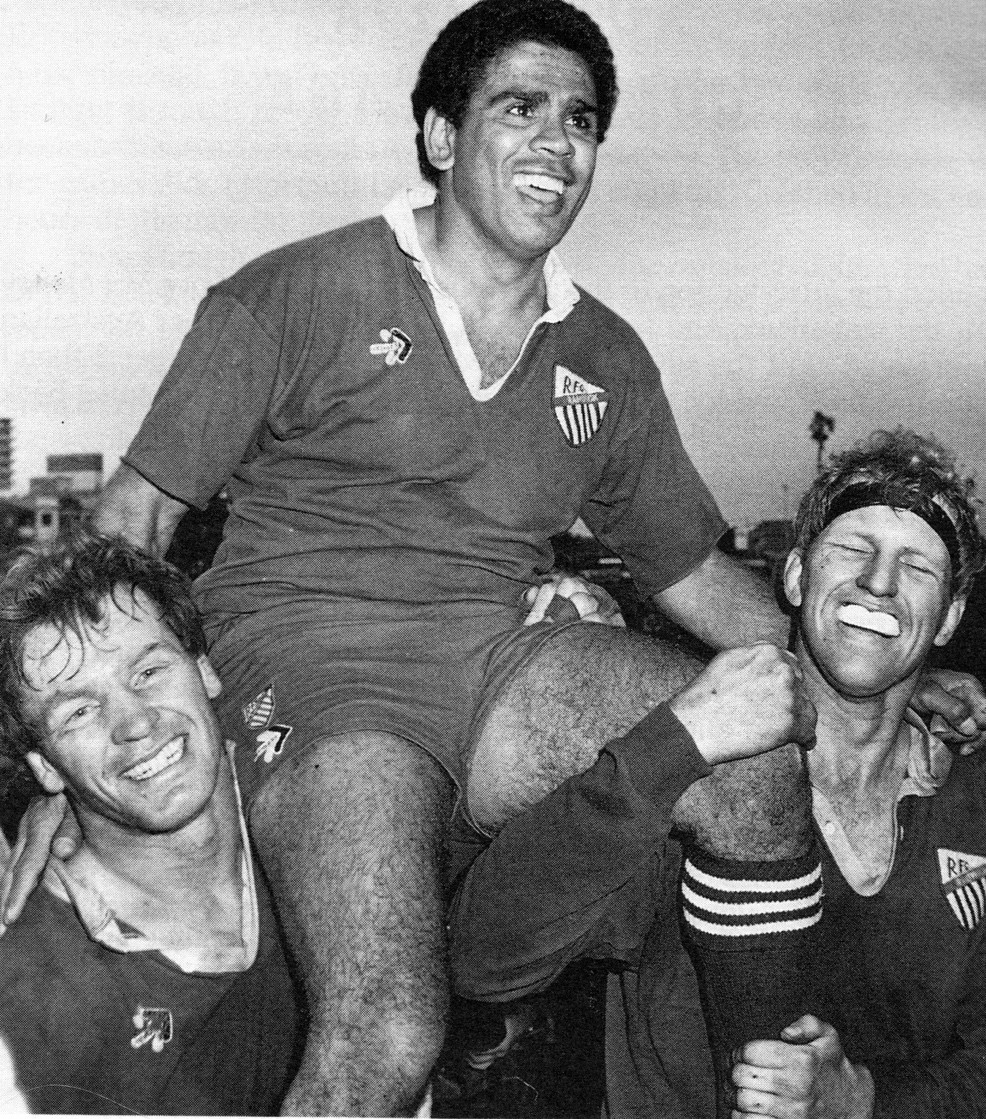
Simon Poidevin is a true legend of Rugby Union with a career spanning over a decade that left an indelible mark on the sport not only as a formidable player, but also as an exceptional leader.
He is only one of four Australians to have won Rugby Union’s Grand Slam, achieved a Series victory in New Zealand, and won a Rugby World Cup.
Understanding that a strong work ethic would be the cornerstone of his success, Simon credits his early days growing up on a farm outside of Goulburn where his family made him appreciate hard work and develop a core sense of resilience.
Known for his fierce determination and referred to as the ultimate competitor, Simon gained the respect of both teammates and opponents alike, and the attention of coaches, commentators and fans. So much so that Gordon Bray AM, renowned sports commentator and sports journalist, colloquially known as ‘The Voice of Rugby’ recently published his book Immortals of Australian Rugby Union, in which he names what he considers to be the best 15 Australian Rugby Union players of all time, of which Simon Poidevin was listed number five.
Q: Gordon Bray recently published his book Immortals of Australian Rugby Union, in which he names what he considers to be the best 15 Australian Rugby Union players. You were listed as the number 5 best player, what did it mean to you to be included in that list?
A: It is an incredible and humbling honour to be selected by Gordon Bray, the voice of Australian rugby, in his all-time 15 from a cohort of over 900 Test -match Wallabies, who have represented the code since its first test in 1899.
I had the fortune to play in an era that saw many of Australian Rugby’s greatest victories – these victories were built around exceptional players and coaches.
Q: In the book you referred to the 1984 team, led by coach Alan Jones and captain Andrew Slack, as “…easily the best rugby team I’d ever been associated with (to that point),” which teammate did you learn the most from during your career?
A: Mark Ella was the most naturally talented player I either played with or against – Mark didn’t like training hard but on the field, he was a genius who tackled superbly and bamboozled opposition defences with magic hands and incredible vision. As a backrower, it was always the best idea to hang close to Mark in attack as he could make you look really good with his offloads.
Q: The full list of 15 players includes some incredible names, players whose careers span close to a century, which fellow Wallabies both before and after your time would you most like to have shared the field with?
A: I’ve talked about Mark Ella and 6 other players of my era selected by Gordon, all legends in their own way. David Campese was a global superstar, and he was another magic man who could put lesser men like myself into time and space, especially during the 1984 Grand Slam tour.
Cyril Towers, Ken Catchpole and George Gregan, like Mark Ella and Campo all played at my famous club Randwick. They were all exponents of the Running Game, with Cyril Towers rightly credited as the “father” of the Running Game.
George Smith was my style of flanker – a huge engine, relentless, fearless at the breakdown and incredible over the ball.
Q: You referred to Jonesy (Alan Jones) as “the ultimate coach, an absolute workhorse, extremely smart, able to get his message across, and with an extraordinary ability to read players moods and know precisely when to increase or ease the workload’, what lessons did you take away from your time with him?
A: Alan’s teams were fitter, more skillful and more balanced across all positions than any other team we played across the globe. He had a canny ability to make training sessions so enjoyable that players didn’t realise how hard they were being worked – our supreme fitness at the end of our 8-week tour of New Zealand in 1986 gave us a huge advantage over the
All Blacks in the final and historic test match victory at Eden Park – the Wallabies their first series win in New Zealand since 1959.
He also had a saying that “rest is the best training” and he always ensured that Friday’s before Saturday Test matches were compulsory rest days.
Q: You are renowned for being the ultimate competitor, a player who inspired and galvanised his teammates by leading by example, going on to Captain the Wallabies later in your career. What does it take to be a great leader whether that be in sporting or a corporate environment?
A: I always had the attitude that the harder I worked, the luckier I got. That applies in all aspects of life, whether it be sport, careers or our families. David Campese’s worldwide success was not just driven by natural talent – he worked as hard as anyone at training and often was the last player off the paddock at the end of a session.
In sport and business, the leaders have to set the example to the those around them with hard work and an embracing attitude to their fellow team-mates or employees to share the journey to success.
Q: Rugby only became commercialized in the 1990s, thanks to satellite television deals. Prior to this, players were not able to earn a living purely from the sport and were required to work full-time jobs as well. You maintained a full-time job throughout your career, and were unavailable for Test duty in 1990 due to those commitments, how hard was it for you and your teammates to balance rugby and work?
A: In some ways, the amateur players played in the lucky era as many of us developed successful working careers, while running parallel careers in rugby. You did need an understanding employer back then!! The 1981 /1982 8th Wallabies tour to the British Isles and Ireland was for 3 months – we got paid an allowance of 7 pounds a day and spent Christmas / New Year in London, before playing England in early January – luckily I was still at University doing a Bachelor of Science degree at UNSW, so I had to study on tour and do catch-up exams when I got back to Australia. I have been President of the Classic Wallabies since 2012 and one of our central functions is to help the players of the professional era transform into successful working careers once they retire.
Q: What advice would you have to athletes today retiring from sport and looking to pursue careers in a corporate environment?
A: Make the effort to get a qualification going early whether it be TAFE, University or an MBA route and leverage that to get an internship, graduate placement or part-time role.
Q: You have gone on to coach some junior rugby teams, is there anyone you’ve coached that has gone on to play professionally at a senior level?
A: Cameron Murray (Rugby League – South Sydney, NSW, Australia) and Victor Radley (Rugby League – Roosters, NSW, England) were both in my Randwick State Championship U/12 team that lost the final in 2010. My middle son Christian was also in that team and he has played 4 years in the US MLR professional league with LA (won a US National title in 2021) and San Diego and won the Shute Shield in Sydney with Randwick in 2023 (He has a bit of catching-up to his dad, who won 8 Shute Shield titles with Randwick!), Patrick Pellegrini was in that 2010 team and he played for Tonga in last year’s Rugby World Cup, scoring a magnificent try against South Africa.
Q: In a full circle moment, you now serve on the Board of the Randwick District Rugby Union Football Club, a club that you played for early on in your career, what does it mean to you to serve on the board of a club that played such a significant role in your career?
A: Randwick Rugby has been a huge part of my life and I have worked very hard with others to make certain the exceptional experience and success enjoyed by my generation can be experienced by those playing for the club now and those in the future – we have an unbending belief that better people make better players, and that mantra drives the club culture.
Q: Between the Rugby Union Grand Slam, the series victory in New Zealand, and the Rugby World Cup, which one is the most memorable for you and why?
A: Winning Australia’s first Rugby World Cup was a unique event in the history of Australian Sport – we couldn’t believe the interest and passion that it drove across Australia and to experience a ticker tape parade cheered on by over 100,000 people up George Street in Sydney was majestic. The 1991 Rugby World Cup final was also the last of my 59 tests for Australia, so it was the perfect way to finish.
Q: How do those achievements mentioned above compare to other milestones in your life, are there any other life achievements that you are more proud of?
A: I’m most proud of my family – Robin my wife and my three sons Jean-Luc, Christian and Gabe
Q: For those starting out on their rugby career whether that be at a junior or senior level, what advice would you have for them, and what qualities or traits would be advantageous to their development?
A: Train hard, respect all those you play with and against, never give up, and being a better person will make you a better player.


